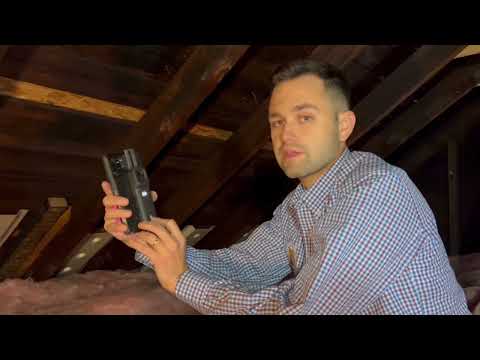
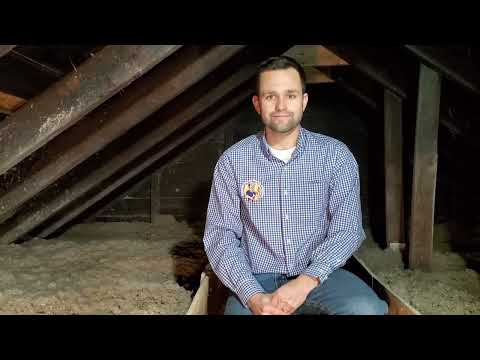
A homeowner in Whitesboro, NY had concerns about common attic issues that affect comfort, energy efficiency, and long-term home performance. After evaluation, several typical deficiencies were identified, including air leakage, inadequate insulation, ventilation limitations, and signs of pest activity.
One of the primary issues found in many attics is air leakage caused by unsealed gaps around light fixtures, wiring, plumbing penetrations, bath fans, and attic chases. These openings allow conditioned air to escape through the attic, especially under the stack effect, where warm air rises and exits through the upper parts of the home while cold air is pulled in from below. This imbalance often leads to uneven temperatures, higher energy bills, and problems such as ice dams forming along roof edges in winter.
Another common concern is insufficient or deteriorated insulation, where older fiberglass materials lose effectiveness over time or become compressed and brittle. Ventilation problems, including blocked or improperly installed vents, can also contribute to moisture buildup and reduced attic performance. In some cases, rodent or bat activity is found, creating contamination and damaging insulation.
To properly address these issues, a full-system approach is recommended. This includes removing existing insulation to expose hidden problem areas, followed by comprehensive air sealing using modern diagnostic tools such as infrared imaging to locate heat loss and air movement. Once sealed, the attic is reinsulated with high-performance TruSoft cellulose insulation to restore thermal efficiency.
Specialized equipment, including high-powered vacuum systems, is used to safely remove old insulation without dispersing debris through the home. Improved storage and access solutions such as insulated catwalks or raised decking systems can also be incorporated without sacrificing insulation performance.
For homes with ductwork located in the attic, sealing and insulating ducts with spray foam helps reduce energy loss and improves HVAC efficiency by minimizing temperature extremes in unconditioned attic spaces.
The result of this integrated approach is a more tightly sealed, better insulated, and properly ventilated attic system that supports improved comfort, lower energy consumption, and more consistent indoor temperatures throughout the year in Whitesboro, NY homes.